[ad_1]

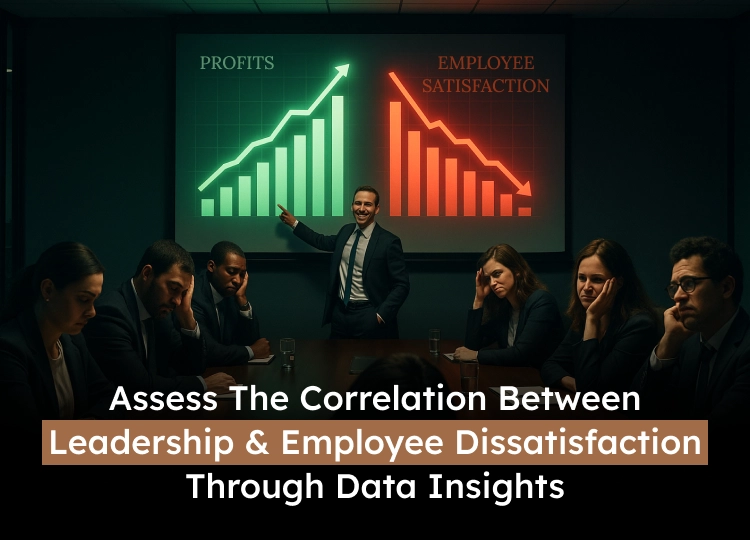
What if your employees stopped caring but never told you? Many leaders worry about resignations, yet the bigger danger lies in people staying while quietly disengaging. This hidden dissatisfaction drains energy and weakens culture. Employees may still show up, but without trust, recognition, or clear direction, their commitment fades. More workers now feel stuck in what has been called the “Great Detachment”, remaining in roles they no longer find meaningful because uncertainty in the job market keeps them from moving on. This blog explores employee dissatisfaction, the role of leadership in shaping it and the steps leaders can take to inspire employee job satisfaction and turn disengagement into commitment.
What Is Employee Dissatisfaction?
Employee dissatisfaction is more than just being unhappy with one’s job. It reflects a deeper sense of disconnection, where people feel undervalued or misaligned with their work environment. This often leads to disengagement, frustration, and eventually a withdrawal of effort. According to a recent survey, 65% of employees globally report experiencing some level of job dissatisfaction, highlighting how widespread this issue has become. For leaders, this is not simply an HR problem but a signal that the workplace culture, communication, and systems may not be meeting employee needs. Dissatisfaction rarely emerges overnight; it grows when leadership fails to provide clarity, recognition, or opportunities for growth.
The impact of dissatisfaction is not only emotional but also affects the entire organisation. Research shows that 32% of employees admit to feeling a sense of dread when heading to work, often tied to poor workplace culture and weak leadership support. When workers start associating their roles with negativity, it drains creativity, collaboration, and overall performance. Leaders play a crucial role here by setting the tone, aligning values, and showing genuine care; they can either amplify dissatisfaction or prevent it from taking hold. In essence, employee dissatisfaction is a reflection of leadership choices, both the ones made and the ones neglected. Defining dissatisfaction explains what it is, but leaders need more than definitions. The real challenge lies in recognising the signs when it begins to surface among employees.
“I needed to enhance my personal brand and overcome my discomfort with public speaking and networking events. Kapable’s personalised sessions gave me the tools and confidence to handle these situations. Recently, I confidently participated in a panel discussion and a networking event, applying the skills I learned. My presentations are now more engaging, and public speaking feels natural, empowering my professional journey.”
– Shreyas Tonse (Founder At Zwayam)
How Can Leaders Recognise Signs Of Employee Dissatisfaction?
Dissatisfaction often begins quietly, but over time, it reveals itself in how employees communicate and perform. Leaders who know the warning signs can address problems before they grow into widespread disengagement or turnover. The data provides valuable insights that show when dissatisfaction is taking hold.

Declining Engagement Levels
Engagement reflects how connected employees feel to their work and their organisation. When it drops, it signals dissatisfaction taking root, often because leaders fail to provide purpose or clear direction.
- Only 31% of U.S. employees are engaged, the lowest in a decade, showing how widespread disengagement becomes when leadership struggles to keep people motivated and connected.
- 17% are actively disengaged, meaning these employees are not just unhappy but working against organisational goals, a direct consequence of weak leadership alignment and oversight.
Growing Resignation Intentions
Employees don’t always quit immediately when they’re dissatisfied, but they often begin looking elsewhere. When leaders ignore this early warning sign, they risk losing valuable talent to competitors.
- Nearly half (45%) of workers have considered leaving their current job in the past year, showing how dissatisfaction quietly builds into turnover risk if leadership fails to act.
- 43% of employees are unsatisfied with their culture and actively search for new jobs, proving that weak leadership in shaping workplace culture directly drives exit behaviour.
Rising Absenteeism Rates
As dissatisfaction grows, employees begin to withdraw not only emotionally but also physically. They avoid work more often and struggle with fatigue, which reduces team performance and weakens overall morale.
- Dissatisfied employees take 20% more sick days than their satisfied colleagues, a clear sign that disengagement directly impacts attendance and reliability.
- Employees who are unhappy at work take up to 10 times more sick days than those who are satisfied, highlighting how dissatisfaction escalates into absenteeism that disrupts both individual output and team stability.
Disconnecting From Core Values
When employees no longer feel connected to the company’s mission or the values of their organisation, dissatisfaction takes on a deeper, more damaging form. Leaders who fail to link everyday work to purpose risk losing long-term commitment.
- Connection to company mission has dropped to just 30%, a record low, showing how employees feel increasingly detached from purpose when leadership does not communicate or reinforce a clear vision.
- 45% of employees with low engagement describe their company culture as poor, highlighting how weak leadership alignment between values and actions deepens the disconnect employees feel.
Diminishing Team Collaboration
Dissatisfaction spreads across teams, weakening how people work together and reducing overall output. When leaders fail to address disengagement, it quietly eats away at both productivity and collaboration.
- Unengaged employees lose an average of 15 workdays in lost productivity per year, showing how dissatisfaction drains focus and effort, leaving organisations with hidden losses in performance.
- Teams with more than two dissatisfied members see a 40% decrease in collaborative effectiveness, proving how unresolved dissatisfaction spreads across groups and undermines teamwork.
Declining Quality Of Work
When dissatisfaction builds, many employees often reduce their discretionary effort. They may complete tasks, but with less care or initiative, which slowly degrades standards and overall performance.
- Workers who aren’t engaged in their jobs make sixty percent more errors, showing how dissatisfaction directly degrades work quality.
- Research shows that disengaged employees deliver up to 34% lower output, demonstrating how dissatisfaction directly reduces overall performance quality.
Recognising the signs of dissatisfaction is only half the challenge. To truly address the issue, leaders must also understand which workplace practices are most responsible for causing it.

Which Workplace Practices Commonly Cause Employee Dissatisfaction?
Employee dissatisfaction stems from gaps between what people expect at work and what leadership provides. The data make it clear that dissatisfaction often grows out of how leaders handle pay, workload, career paths, management style, and workplace culture.

Inadequate Employee Benefits
Pay and benefits are often the first signals employees look to when assessing how much leadership values them. When compensation packages lack fairness or clarity, dissatisfaction grows quickly.
- 47% of U.S. workers cite salary as their top source of dissatisfaction, proving that without competitive salaries, employees feel undervalued regardless of other workplace factors.
- 17% are completely dissatisfied with health benefits, and 14% with retirement benefits, which suggests that leadership decisions about long-term security and employee well-being carry as much weight as monthly paychecks.
Excessive Work Pressure
The way leaders assign tasks and communicate priorities directly influences how employees experience their workload. When direction is missing or resources are stretched, everyday pressure quickly turns into stress and burnout.
- 24% of workers identify workload as a major source of dissatisfaction, showing how poor leadership in balancing responsibilities can overwhelm employees and weaken motivation.
- 43% report burnout tied to workplace communication issues, proving that unclear or inconsistent instructions from leaders don’t just confuse teams but also magnify stress.
Ineffective Managerial Support
Day-to-day interactions with managers shape how employees experience their jobs. Weak communication or disrespect from leaders quickly triggers dissatisfaction.
- 42% of employees witnessed inconsiderate treatment by a manager, proof that toxic leadership behaviours damage employee self-esteem and create environments where employee motivation declines.
- 20% say they cannot always rely on supervisors for accurate information, showing how ineffective communication skills reduce confidence in leadership and leave employees disengaged.
Stalled Career Development
Employees expect leaders to create pathways for learning and long-term growth. When these opportunities are missing, even high performers begin to feel stuck and disconnected from their roles.
- 21% of employees blame limited career advancement opportunities for dissatisfaction, showing how stagnant leadership planning undermines motivation.
- 43% feel unsatisfied with their career path, a sign that leaders are not prioritising mentoring, training, or promotions.
Lack Of Recognition
Recognition is one of the simplest yet most overlooked drivers of satisfaction. When leaders fail to acknowledge contributions or provide constructive feedback, employees feel invisible and undervalued.
- 69% of employees say they would work harder if their efforts were better recognised, showing how a lack of appreciation directly lowers motivation.
- People who are never recognised are 27% more likely to look for other job opportunities, proving that leadership neglect in this area fuels dissatisfaction and turnover.
Negative Workplace Culture
Culture is shaped by leadership choices and reinforced through daily actions. When leaders fail to live up to the values they promote, employees lose their sense of purpose and connection to the organisation.
- 31% of departing employees cite misalignment between company mission and personal values, showing how gaps between leadership’s words and actions drive people away.
- 32% admit they feel dread heading to work, clear evidence that leaders who neglect culture create an unhealthy work environment employees would rather avoid than engage with.
Workplace practices may be a major source of dissatisfaction, but they rarely exist in isolation. Leadership behaviours themselves often play a critical role in contributing to that dissatisfaction.
What Role Does Leadership Play In Employee Dissatisfaction?
Leaders set the tone and create the environment in which employees either thrive or disengage. When leaders fail to communicate clearly or act inconsistently with company values, dissatisfaction takes root.

Demonstrating Toxic Behaviours
The way leaders treat their people impacts how employees feel about coming to work each day. When employees encounter hostility, disrespect, or toxic behaviour from their managers, dissatisfaction grows quickly.
- More than 4 out of 10 workers observed inconsiderate treatment of a co-worker by another employee, suggesting that when leaders fail to model respect, toxic behaviour seeps into peer-to-peer relationships as well.
- 87% of workers say managers shape the work environment, showing that the tone leaders set directly determines whether employees thrive in a healthy culture or suffer in a toxic work environment.
Communicating Ineffectively
Leaders are responsible for providing clarity, honesty, and consistency. When communication breaks down, employees feel undervalued and disconnected from the organisation.
- 86% of employees and executives cite lack of effective communication as the main cause of workplace failures, with communication breakdowns often resulting in missed deadlines, delays, and costly failures.
- 68% of employees believe leaders exaggerate or lie, showing how dishonesty at the top destroys trust and fuels dissatisfaction across the workforce.
Neglecting Employee Development
Employees want to know their leaders care about their development and future. When leaders fail to provide opportunities for advancement or regular feedback, motivation quickly fades.
- 79% of workers say clear opportunities for advancement make them more satisfied at work, proving that when leaders invest in professional growth, they directly strengthen engagement and loyalty.
- Nearly two-thirds(64%) of employees want better feedback from their managers, highlighting that leaders who ignore coaching and recognition drive frustration instead of helping employees pursue their career goals.
Failing To Uphold Values
Leaders are responsible for connecting employees to the organisation’s purpose. When leaders fail to align actions with values or communicate the mission clearly, employees lose meaning in their work.
- 55% of employees say they would resign from a new job if the culture did not align with their personal values, reinforcing that culture is not optional; it is a deal-breaker shaped by leadership.
- 23% of prospective employees say company values and culture are the most significant influence on accepting a job, highlighting how leadership-driven value alignment affects not only retention but also hiring.
Ignoring Employee Wellbeing
Leadership decisions directly influence whether employees feel cared for and supported. When leaders ignore stress, workload, or mental health, dissatisfaction grows into reduced productivity.
- 44% of employed adults worry about retaliation or losing their job if they take time off for mental health, highlighting how workplace stigma and leadership culture can discourage employees from seeking needed support.
- Only 39% of employees believe someone at work cares about them, which proves that the absence of empathy from leaders creates a culture of neglect and dissatisfaction.
Failing To Address Gender Disparities
Employee satisfaction is not experienced equally across the workforce. Gender-based differences highlight how leadership decisions and benefits can create unequal experiences that leave women less supported than men.
- Women consistently report lower satisfaction than men, with a 9.4% gap overall. For example, only 51% of women are satisfied with sick day policies compared to 60.4% of men, proving that leadership decisions on policies can unintentionally disadvantage some groups.
- Mental health benefits highlight the same divide: 53% of men are satisfied with workplace mental health support, compared to just 44.9% of women, showing how leadership must address gender disparities in wellbeing support.
Leadership can contribute to dissatisfaction, but it can also drive satisfaction. When employees feel supported, the results are overwhelmingly positive for both people and organisations.
What Positive Outcomes Result From Employee Satisfaction?
Leadership plays a pivotal role in creating these positive outcomes: when leaders show care, provide clarity, and align culture with values, satisfaction rises. The benefits ripple across productivity, retention, collaboration, customer relationships, and ultimately profitability.

Boosting Employee Productivity
Satisfied employees bring their full energy and creativity to work, rather than simply doing the minimum. Leaders who invest in supportive environments and recognition systems activate this discretionary effort.
- Happy employees are 12% more productive, proving that wellbeing is not just a soft benefit but a driver of tangible business value.
- Delighted employees are 31% more productive than less satisfied colleagues, showing that leadership attention to employee needs translates directly into output.
- Well-designed workplaces increase job satisfaction for 84% of employees, evidence that leadership investment in physical and digital environments boosts focus and efficiency.
Building Workforce Loyalty
A satisfied workforce is less likely to engage in job hunting, reducing costly turnover. Leaders who create cultures of trust and balance retain top performers and institutional knowledge.
- Satisfied employees are 87% more likely to stay with their company, demonstrating how satisfaction builds loyalty.
- 42% of employee turnover is preventable, showing that many exits can be avoided when leaders address fixable issues such as poor communication, lack of recognition, or weak culture.
- 31% of new employees quit within their first six months, proving that early dissatisfaction, often tied to weak onboarding and unclear leadership expectations, drives swift turnover.
Improving Team Collaboration
When employees feel valued and supported, they are more likely to share ideas and collaborate effectively. Leaders who encourage openness and inclusion spark innovation that drives competitive advantage.
- Highly engaged teams demonstrate 14% higher productivity, showing that collaboration flourishes in satisfying workplaces.
- Engaged business units achieve 18% higher sales productivity, evidence that teamwork and innovation translate into results.
- Employees who feel their voice matters are 4.6 times more likely to perform at their best, proving that leadership-driven inclusion sparks creativity.
Strengthening Customer Loyalty
Customer satisfaction begins with employee satisfaction. Employees who feel supported deliver better service, which strengthens loyalty and drives growth.
- Highly engaged business units achieve 10% higher customer loyalty, proving that customer trust is rooted in employee engagement.
- Businesses with employee engagement programs see 233% greater customer loyalty compared to those without such programs.
- Companies with highly engaged employees see a 20% increase in customer satisfaction ratings, reinforcing that leaders who invest in their people also strengthen customer experiences.
Driving Greater Profitability
The cumulative effect of satisfaction is financial performance. Leaders who build positive organisational cultures see the rewards reflected in growth, profitability, and market value.
- Companies with high engagement see a 23% increase in profitability, showing the direct link between employee satisfaction and financial results.
- Organisations with satisfied employees achieve 30% higher annual stock price growth, proving that employee wellbeing is an investment that pays shareholders back.
- Companies with high engagement experience a 21% profitability increase and a 17% productivity boost, evidence that satisfaction multiplies business success.
Enhancing Employer Branding
Satisfied employees often become advocates for their organisation, strengthening its reputation in the talent market. Leaders who prioritise satisfaction create workplaces where employees willingly recommend their company to others, making it easier to attract high-quality candidates.
- Companies with strong employee engagement see up to 50% more qualified applicants, proving that satisfaction fuels a positive employer brand.
- 51% of employees who receive regular recognition say they are highly likely to recommend their company, because recognition strongly boosts loyalty and overall satisfaction, making employees more likely to recommend their company.
- Well-recognised employees are 45% less likely to leave within two years, showing that when leaders build a culture of recognition, they create loyal advocates who strengthen the company’s reputation in the talent market.
The benefits of employee satisfaction show what’s possible when leaders get it right. But to sustain these outcomes, leaders must also act quickly to address dissatisfaction before it harms culture and employee performance.
What Strategies Should Leaders Use To Reduce Employee Dissatisfaction?
Employee dissatisfaction builds quietly through unmet expectations and weak leadership responses. Leaders who recognise the early signs and take proactive steps can turn disengagement into motivation and growth.

Conduct Quarterly Town Halls
Town halls are structured, company-wide meetings where leaders share updates and answer employee questions. This matters because one in ten American workers worries about keeping their jobs, and that anxiety directly undermines productivity and trust. Here is how you can conduct it:
- Plan consistent cadence: Host sessions every quarter, aligned with key business cycles (e.g., after quarterly results, before new projects, or at the start of fiscal planning).
- Set a clear agenda: Cover company performance, upcoming initiatives, and cultural or HR updates, leaving at least 20–30% of time for Q&A.
- Encourage interaction: Use polls, live questions, and anonymous submission tools to ensure employees feel safe raising concerns.
- Follow up: Share a summary of the discussion and highlight actions taken regarding employee feedback, showing that these forums create a significant impact, not just conversation.
Tools: Leaders can make town halls more engaging by using Slido or Mentimeter for anonymous Q&A and polls, while Zoom or Teams breakout rooms ensure remote and hybrid workers feel equally included. Platforms like Culture Amp or Officevibe can capture employee sentiment before and after the event, helping refine future sessions.
Organise Stay Interviews
Stay interviews are one-on-one conversations between leaders and employees designed to understand what keeps people engaged and what might cause them to leave. Preventable turnover makes up 63% of job exits, showing leadership action can reduce dissatisfaction and improve retention. Here is how you can organise it:
- Schedule regular sessions: Hold stay interviews once or twice a year, separate from performance reviews, so employees see them as open conversations, not evaluations.
- Ask open-ended questions: Explore what employees enjoy, what challenges them, and what changes could improve their experience.
- Document and analyse: Track patterns across teams to identify recurring issues like workload or lack of growth opportunities.
- Take visible action: Act on feedback and communicate changes back, proving employee input shapes company decisions.
Tools: Leaders can use structured guides like the SHRM Stay Interview Model or digital tools such as Lattice or Qualtrics to standardise questions and track responses. Combining qualitative feedback with pulse survey data gives leaders a full picture of employee sentiment.
Implement Total Rewards Framework
The Total Rewards Framework integrates both financial and non-financial rewards to create a comprehensive approach to employee value. This matters because 73% of U.S. workers would change jobs for higher pay, showing that rewards signal leadership’s commitment to fairness. Here is how you can implement it:
- Conduct benchmarking: Review and benchmark market compensation data annually to ensure pay stays competitive and aligned with industry standards.
- Establish salary ranges: Develop clear pay structures that minimise bias, improve transparency, and ensure fairness across roles.
- Pair monetary and recognition: Combine competitive salaries and comprehensive benefits with recognition programs and flexibility to address multiple employee needs.
- Communicate openly: Host Q&A sessions to explain how compensation decisions are made, reinforcing trust and fairness.
Techniques: Leaders can use platforms like Payscale or Mercer for benchmarking, and Lattice or Culture Amp to integrate recognition and feedback into daily workflows. Adopting the Total Rewards Model ensures employees feel valued not just for their output but as whole individuals, while surveys and analytics help measure which benefits drive satisfaction and retention the most.
Practice Stress First Aid Framework
The SFA framework is designed to help leaders recognise and support employees showing early signs of stress or burnout. This is vital, as 92% of employees value mental health support, showing they expect leadership to champion their wellbeing. Here is how you can practice it:
- Identify stress signals: Train managers to notice behavioural changes such as withdrawal, irritability, or reduced performance.
- Provide immediate support: Create safe spaces for conversations, encourage use of Employee Assistance Programs (EAPs), and offer access to counselling services.
- Promote coping strategies: Share tools like mindfulness, resilience workshops and practices that encourage a healthy work-life balance.
- Monitor and follow up: Regularly check back with employees to ensure stress levels improve and adjustments are effective.
Tools: Leaders can incorporate the framework by offering manager training sessions on mental health awareness, using tools like Headspace for Work or Calm Business for stress management, and integrating pulse surveys to measure well being trends.
Create Employee Journey Maps
Employee Journey Mapping is a strategic approach to visualising the entire employee lifecycle from onboarding to career growth and even exit. It matters because 49% of employees feel their organisation falls short on promised experiences, showing unmet expectations drive dissatisfaction. Here is how you can create it:
- Map the lifecycle: Break down stages such as recruitment, onboarding, training, performance, career development, and exit.
- Identify pain points: Use surveys and focus groups to understand where employees feel disengaged or unsupported.
- Design improvements: Align policies and leadership behaviours to resolve recurring issues at each stage.
- Review and refine: Revisit the map annually to adapt to new employee needs and evolving workplace trends.
Tools: Leaders can use platforms like Miro or Lucidchart to visually map journeys. Analytics dashboards from tools like Workday can then track satisfaction trends, ensuring leaders act on insights to continuously improve the employee experience.
Strategies to address dissatisfaction are powerful in theory, but real-world examples bring them to life. Several organisations have successfully tackled these challenges and transformed their workplaces.
Which Organisations Have Successfully Addressed Employee Dissatisfaction?
Real-world examples show how different organisations have tackled employee dissatisfaction in their own ways. From bold cultural reinventions to participative management practices, these cases highlight how leadership choices directly shape morale and long-term loyalty.

Netflix
Netflix faced the challenge of balancing accelerated growth with keeping employees engaged and motivated. Traditional HR systems of rigid rules and bureaucratic performance reviews were creating dissatisfaction. Leadership decided to reinvent its people strategy around trust and accountability.
How they dealt with it:
- Replaced rigid vacation policies with unlimited, trust-based time off.
- Moved from task-based performance management to informal, continuous feedback.
- Adopted the “Keeper Test” to ensure managers retain only employees they’d fight to keep, providing fair severance otherwise.
- Linked compensation closely to market rates to avoid dissatisfaction over pay gaps.
Outcomes: This approach built a culture of high accountability and freedom, giving employees flexibility and trust. Morale improved among top performers who thrived under autonomy, while the company minimised long-term disengagement risks. However, the high-pressure environment also meant employees had to constantly perform at their peak, which some critics argue can sustain low-level anxiety. Overall, Netflix’s bold HR redesign became a benchmark for modern employee engagement.
Zappos
Zappos has long been considered a gold standard for workplace culture. With employee satisfaction tied closely to customer happiness, leadership recognised that culture and values had to be central.
How they dealt with it:
- Introduced 10 core values and aligned all hiring and promotions with them.
- Empowered front-line employees with decision-making authority to avoid micromanagement frustrations.
- Offered employees a “pay to quit” option to ensure only those aligned with values stayed.
- Experimented with alternative management models like Holacracy to enhance autonomy.
Outcomes: Zappos maintained one of the most engaged workforces in retail and e-commerce, known for high satisfaction and loyalty. Employees who stayed felt connected to a mission larger than profit, while misaligned employees exited early. Although experiments like Holacracy created temporary confusion, Zappos’ overall emphasis on culture demonstrated that strong values can significantly reduce dissatisfaction and turnover while driving customer loyalty.
Maruti Suzuki
As India’s leading automobile manufacturer, Maruti Suzuki employs thousands across its plants and offices. With such a large workforce, maintaining employee satisfaction while meeting high production demands has always been a challenge.
How they dealt with it:
- Introduced participative management practices, encouraging employees to share ideas and be involved in decisions.
- Focused on improving the quality of work life (QWL) by addressing job stress, safety, and workplace environment.
- Strengthened performance appraisal systems, offering structured feedback to highlight strengths and identify training needs.
- Implemented motivational strategies, combining monetary rewards like incentives with non-monetary recognition to boost morale.
Outcomes: These initiatives helped Maruti Suzuki improve employee engagement levels and build trust in leadership decisions. While challenges remain in areas like career progression and role clarity, Maruti’s consistent focus on QWL and employee involvement has reduced dissatisfaction and strengthened long-term commitment. Over time, this approach has also reinforced a culture of collaboration, ensuring that employees feel more connected to both their roles and the organisation’s broader goals.
The journey from dissatisfaction to satisfaction shows one constant: leadership defines the outcome. Organisations that recognise this truth are the ones best equipped for resilience and growth.
Conclusion
Employee dissatisfaction grows quietly when leadership misses opportunities to connect and support. Over time, it weakens trust and pushes talented people to disengage or leave. The encouraging part is that dissatisfaction can be reversed. When leaders focus on fairness and well-being, employees respond with loyalty and creativity. Open communication reduces uncertainty, and investments in professional development turn potential frustration into growth. Small, consistent actions create lasting cultural shifts where people feel valued for both their work and their presence. The path forward requires leaders to view satisfaction as more than a human resources metric. By committing to stronger leadership development and a people-first mindset, organisations can transform dissatisfaction into lasting engagement and resilience, ensuring both employees and the business grow together.
[ad_2]
Statistics On Employee Dissatisfaction From Poor Leadership – Morale, Turnover & Performance