[ad_1]

“If your actions inspire others to dream more, learn more, do more, and become more, you are a leader.” – John Quincy Adams
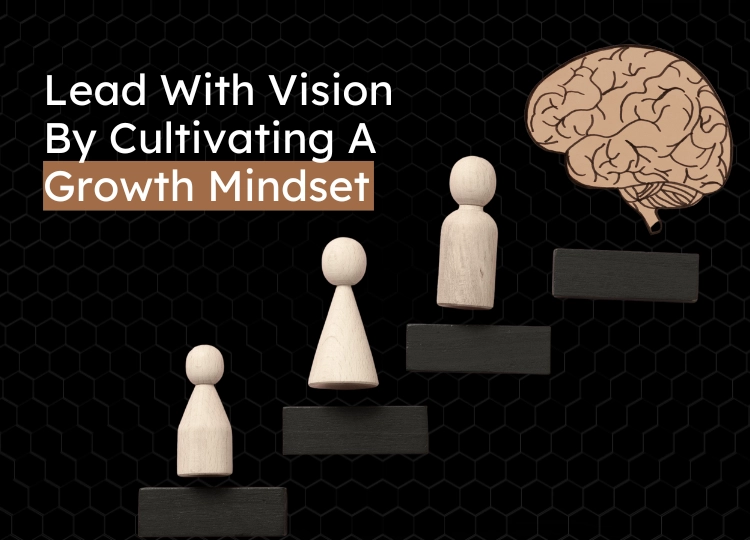
When your actions spark growth and inspire others to reach for more, you’re truly capturing what it means to lead effectively. The best leaders don’t necessarily have all the answers; rather, they possess the ability to keep evolving and encouraging those around them to do the same. This process of inspiration and growth defines what it means to lead with impact. At the heart of this leadership is a growth mindset—a belief that abilities and potential can be developed through effort, learning, and perseverance.
But the real challenge begins with recognizing where your mindset stands. Understanding the difference between a fixed and growth mindset is the first step to leading in a way that fosters growth in yourself and your team.
Which Mindset Do You Lead With?
As a leader, your mindset shapes how you respond to challenges, how you view your abilities, and how you interact with your team.
But many leaders unknowingly operate with a fixed mindset in certain areas while believing they embrace growth. So, how do you know which mindset is driving you?
Do you find yourself avoiding difficult tasks or conversations because you’re unsure how things will turn out? Or maybe you hesitate to delegate big projects, thinking it’s easier if you do it yourself because you know you’ll get it right. These subtle habits can signal something deeper than just caution, they might indicate that you’re operating from a place of fear of failure or the need to prove your competence.
On the flip side, there are moments when you feel energised by a challenge. You might take on something new, even if you’re not an expert, trusting that you’ll figure it out along the way. You don’t mind if the project isn’t perfect from the start, as long as you’re learning and improving. This behaviour suggests a mindset that thrives on growth and learning, rather than sticking to what you already know.
Here’s the key difference: when you’re in a fixed mindset, your focus tends to be on maintaining control and avoiding risks that might make you look like you don’t have it all together. You see mistakes as threats to your image, so you prefer to stay in your comfort zone. This might feel safe, but over time, it stifles innovation and progress.
With a growth mindset, however, you view challenges as opportunities. You’re open to experimenting, even if it means stumbling along the way. You understand that abilities can be developed and that improvement comes through effort and learning, not just inherent talent.
If you find yourself more focused on protecting your image or avoiding mistakes, a fixed mindset might be taking the lead. But if you’re willing to embrace challenges, see failures as part of the learning process, and ask for help when needed, you’re likely operating with a growth mindset.
But here’s where it gets interesting: you might find that your mindset shifts depending on the context. In some areas, you may naturally embrace growth, perhaps in how you approach innovation or learning new skills. Yet in others, like handling criticism or admitting when you’re wrong, the fixed mindset can sneak in. The goal isn’t to be perfect but to recognize when a fixed mindset is limiting you and consciously shift towards growth.

Why Does Growth Mindset Matter In Leadership?
When you lead with a growth mindset, you do more than just handle challenges better. You change the way your team views their own potential. As a leader, your mindset doesn’t just affect how you handle situations, it sets the tone for your entire team.
Your attitude towards learning and improvement is always contagious. If your team sees you constantly improving, not just settling for “good enough,” they’ll start to mirror that behaviour. And it’s not about motivating with words, it’s what you show through your actions. When you embrace problems as learning opportunities, it gives everyone else permission to fail, learn, and try again without the fear of judgement.
Why does this matter in leadership? It’s not just about solving problems in the moment—it’s about creating a culture that thrives on innovation and progress. If you, as a leader, are willing to stretch your limits, others will follow. Over time, this approach compounds. Instead of a stagnant team, you have one that’s constantly learning and evolving, creating a ripple effect that goes beyond your immediate circle.
Leaders who believe their talents are fixed often focus on protecting their image or avoiding mistakes. But here’s the problem with that: it limits your ability to innovate. You become cautious, and in today’s fast-moving world, playing it safe means falling behind.
By recognizing which mindset you lead with in different situations, you can start working on the areas where the growth mindset needs to be improved—and we’re here to help guide you through that process.
How To Improve A Growth Mindset As A Leader?
There’s no single formula for developing a growth mindset as a leader. Instead, it’s about making fundamental changes in how you approach challenges, learning, and leadership. Building a true growth mindset requires ongoing shifts in both your thinking and actions which starts with owning your mistakes:

Own Your Mistakes
As a leader, it’s easy to feel like you need to have all the answers and never show weakness. But that’s not realistic, and frankly, it’s not helpful for your team either. Say, “Here’s what went wrong, and here’s what I’ve learned.” Ask your team if they’ve experienced similar challenges or have suggestions on how to handle the situation better.
If your team sees you own up to your own slip-ups and treat them as learning experiences, they’ll feel more comfortable taking risks themselves. And the reality is, real growth happens when people push their limits—not when they play it safe. Share what went wrong, but also focus on what you learned and how you plan to do better next time. Make sure your team sees you working on the areas you’ve admitted to struggling with.
Replace “I Can’t” With “I Can’t Yet”
A fixed mindset often hides in subtle phrases like “I can’t do this” or “I’m just not good at that.” But here’s the thing: when you add one word—yet—it completely changes the narrative.
Whether it’s a tough project, learning a new skill, or handling a difficult conversation, notice when your mind jumps to limitations. As soon as you catch yourself thinking in a limiting way, add “yet” to the end. Instead of “I’m not good at presentations,” try “I’m not good at presentations yet.” This subtle shift reinforces that improvement is possible with effort.
When you say “I can’t yet,” you’re acknowledging that you’re still learning. You’re allowing room for growth. This simple mindset shift can change how you approach difficult tasks. Instead of avoiding them or feeling defeated before you start, you embrace the idea that you’re capable of learning. It’s not about having all the skills right now, it’s about being willing to develop them.
Welcome Criticism
Getting feedback can be tough, but it’s essential for growth. As a leader, it’s easy to fall into the trap of thinking you need to have it all figured out. But that’s where growth delays. One of the most powerful things you can do is actively seek feedback—not just from your peers, but from your team as well. When you ask for criticism, you show that you’re open to learning and improving. Don’t just listen to the good stuff—focus on what you can do better.
It’s easy to get defensive or start explaining why you did what you did. Resist the urge. Instead, focus on listening. If needed, ask clarifying questions, but avoid justifying your actions. The goal is to understand, not to explain. The goal is to understand, not to explain. It’s not about proving you’re perfect; it’s about becoming a better version of yourself. And the more you model this openness, the more your team will feel comfortable doing the same.
Ask For Help
Leaders often feel the need to be the strongest, most capable person in the room, but that’s a myth. Great leaders know when to ask for help. Whether it’s leaning on your team for support, seeking advice from a mentor, or collaborating with peers, asking for help isn’t a sign of weakness—it’s a sign of strength. Think about areas where you might be stuck, or where someone else’s expertise could help you move faster. This could be a project, decision-making, or even personal development. Asking for help doesn’t mean you’re not capable; it shows you’re resourceful. When asking for help, make sure you’re clear on what you need. Instead of a vague “Can you help me with this?”, try “I’d love your input on how I can improve this process,” or “Can you help me understand this aspect better?”
Help can come from various places—colleagues, mentors, online resources, or professional leadership development programs. When you’re comfortable taking help, you show that learning is a constant process. You also give others permission to do the same. It creates a culture of collaboration and shared growth, rather than one where everyone feels they have to figure things out on their own.
“This journey transformed my confidence and communication skills, enabling me to deliver impactful presentations, including a town hall for 500 people and a compelling business pitch to a senior stakeholder. Kapable has been a game-changer in my professional growth.”
– Ajay Deshmukh (Director At JPMorgan Chase)
Challenge What You Think You Know
Take a step back and question why you approach certain situations the way you do. Many leaders unknowingly cling to outdated beliefs, whether it’s about themselves or their team, and those beliefs can limit what’s possible. Are you sticking to what’s comfortable, or are you challenging yourself to think differently? Look for patterns. Instead of brushing off past criticisms, look at your performance reviews over time.
Self-awareness is not just about understanding where your strengths lie, but also being aware of the beliefs and habits that might be holding you back. It isn’t a one-time effort. Periodically reflect on how far you’ve come and whether there’s still room for improvement based on the feedback you’ve received.
Johari Window
The Johari Window is a useful model to help leaders understand themselves better by exploring the relationship between what they know about themselves and what others know. This tool helps identify blind spots and areas for growth.

Here’s how it works:
- Open Area: This is what you and others know about yourself. Aim to expand this area through honest communication and feedback.
- Blind Spot: These are the things others see in you, but you’re unaware of. The key here is to seek feedback to uncover these blind spots.
- Hidden Area: These are aspects you know about yourself but haven’t shared with others. Consider how being more transparent could help build trust and improve team dynamics.
- Unknown Area: This is what neither you nor others know about yourself. It can be explored through self-reflection, learning, and new experiences.
Encourage your team to share what they perceive your strengths and weaknesses are, especially in areas you might be unaware of (blind spots). Share your thoughts and experiences with your team, allowing them to understand your decision-making process better (reducing the hidden area). After receiving input from others, take time to reflect on what you’ve learned and consider how you can apply it to grow as a leader.
Imagine New Possibilities
Curiosity is the foundation of a growth mindset. When you’re curious, you’re constantly looking for new ideas, new ways of doing things, and new perspectives. As a leader, cultivate that sense of curiosity not just in yourself but in your team. Don’t settle for “this is how we’ve always done it.” Make it a habit to ask why things are done a certain way and whether there’s room for improvement. Encourage your team to question processes and come up with creative alternatives.
Encourage your team to ask questions, challenge the status quo, and imagine what could be. What does the ideal solution look like? How can we get there? When you lead with curiosity, you unlock creativity and innovation. It keeps you and your team from settling for “just okay” and pushes everyone to aim higher. Take time to envision what the perfect solution, team, or outcome looks like. This helps you and your team work toward something greater than just fixing problems. Instead of settling for minor improvements, you start to see what could be achieved with bold, innovative thinking.
Make Learning A Habit
Learning isn’t something that happens overnight, and it’s not just about quick wins. To truly grow, you need patience and persistence. As a leader, make learning an ongoing priority, not just for yourself, but for your team. When things don’t go as planned, treat them as learning opportunities. Offer for development, whether through mentorship, training, or simply encouraging team members to stretch their skills in new areas. Set aside regular time for learning. This could be through reading a chapter of a book, watching a webinar, or even reflecting on your own leadership style. The goal is to make learning a part of your schedule, not just something you do when you have time.
Stick with learning even when it feels challenging, with persistence, improvement will come. Whether it’s a new skill, a leadership approach, or a project, persistence pays off. Leaders who consistently push through tough times often come out stronger and more effective on the other side.
Measure Outcomes, Not Hours
Instead of focusing on the hours logged or the tasks completed, shift your focus to the impact of the work being done. In a growth mindset culture, it’s not about how much time you put in, but about what you achieve. What results are being produced? What value is being added?
Start by defining what success looks like for you and your team. Instead of vague targets like “work harder” or “increase productivity,” set clear outcomes, such as “increase sales by 15% in the next quarter” or “improve team response time by 10%. When you measure outcomes, you encourage your team to work smarter, not just harder. It helps prioritise meaningful progress over just keeping busy, and it’s a mindset shift that leads to real growth. Trust your team members to manage their time effectively and produce results. By allowing flexibility in how work is done, you’re more likely to inspire creativity and higher-quality outputs.
Lead By Example
“Leaders must be close enough to relate to others, but far enough ahead to motivate them.” – John C. Maxwell
One of the most powerful ways to encourage a growth mindset within your team is to model it yourself. People will notice what you do far more than what you say. When your actions align with the values of learning, resilience, and progress, it sets a strong example for your team to follow. It’s one thing to tell your team to embrace challenges, learn from mistakes, and keep growing—but it’s another to show them.
Choose projects that push you out of your comfort zone and share this process with your team. For instance, if there’s a technical skill you’re unfamiliar with, tackle it and let your team see you work through it. Talk about the frustrations, learning moments, and small wins along the way. This shows them that learning is an ongoing process. During a meeting or a project review, highlight moments where you adjusted your approach based on new insights or feedback. This live demonstration of adaptability shows your team that learning and growing are constant parts of leadership. Actions speak louder than words, and when your team sees you walking the talk, they’ll be inspired to do the same.
The impact of a leader with a growth mindset extends far beyond individual success—it transforms the entire team into a resilient, high-performing unit.
Conclusion
Starting your journey towards a growth mindset can be as simple as keeping a “failure journal.” Dedicate a notebook or digital document to record any setbacks or mistakes you encounter. Note what happened, what you learned, and how you plan to adjust your approach moving forward. Regularly reviewing your entries will help you see failure as a valuable part of your learning process rather than a setback. This practice not only encourages reflection but also helps you focus on growth and improvement. By embracing this habit, you’ll shift your perspective on challenges, making them stepping stones on your path to becoming a more resilient and effective leader.
[ad_2]
Cultivating A Growth Mindset: Leadership Strategies For Success